


Updates

2024: The Year of Prayer
Pope Francis has called for 2024 to be honored as a “Year of Prayer.” What does this mean? The special character of this year is based on the year following, 2025, which is a jubilee year for the Church. The custom of the jub … continue reading..
New Articles
Homilies for April 2024
For Divine Mercy Sunday, the Solemnity of the Annunciation, the Third Sunday, Fourth Sunday, and Fifth Sunday of Easter Second Sunday of Easter (Sunday of Divine Mercy) – April 7, 2024 Readings: Acts 4:32–35 • Psalm 118:2–4, 13–15, 22–24 • 1 John 5:1–6 • John 20:19–31 bible.usccb.org/bible/readings/040724.cfm What does it mean to “bear witness” […]

Induction and Allegory: Clement of Alexandria’s Catechetical Method
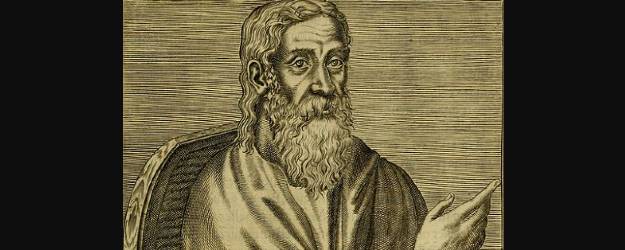
This essay examines the pedagogical contribution of Clement of Alexandria (A.D. 150 – 215) and implications for contemporary catechesis. Inductive Learning and Catechesis Allegorical exegesis, a unique aspect of Clement’s method, presents a useful model for contemporary catechists, when considering the question of how sacred mystery can be taught. Those at the outset of their […]
Seven Characteristics of the Resurrection Appearances
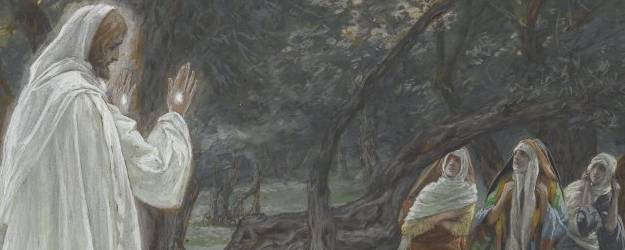
The Resurrection is a central mystery of our Christian faith. Without the perspective of the resurrection, we lose sight of eternity and the life hereafter. Yet despite the centrality of this mystery, I wonder how many Christians could answer if we were to ask, “Knowing the importance and the centrality of the mystery of the […]
Saint Paul, Masculinity, and Priestly Identity
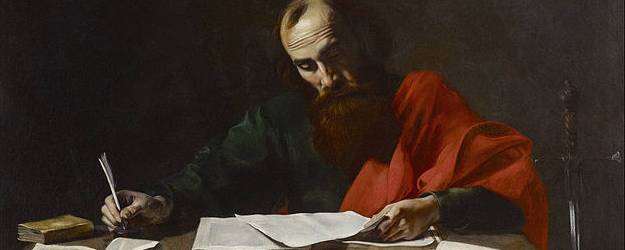
When speaking to his son, King David reminds Solomon what it takes to succeed as king: “I am about to go the way of all the earth. Be strong, be courageous [לְאִֽישׁ], and keep the charge of the Lord your God, walking in his ways and keeping his statutes, his commandments, his ordinances, and his […]

Counsels vs. Commands in Vocational Discernment
Anxiety. Fear. These words frequently come up in commentary about young Catholics and vocational discernment.1 As one recent writer puts it: “Devout young adults — even not-so-young adults, in their late twenties and thirties — often get stuck in discernment, unable to commit either to marriage, priesthood, or religious life for fear they might actually […]
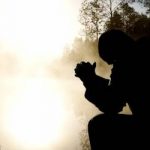
Prayer as the Fountain of Faith
Prayer is the latch that opens the window to God’s mysterious beauty and brings fresh air to our soul. Without the breath of prayer, faith suffocates. A daily practice of prayer stabilizes us against winds of deceit. Prayer liberates us from mere feelings, delivering us from the churning waters of today to the deep sea […]

Questions Answered – April 2024
The Mission of the Family Question: The government seems to be usurping more and more of what are traditionally rights of the family. What is the Church’s teaching about this? Answer: The family has four dimensions which grow out of the relationship of marriage, all of which must be protected and promoted by the greater […]

Book Reviews – April 2024
The Apostle Paul and His Letters: An Introduction. By James B. Prothro. Reviewed by Fr. Vien V. Nguyen, SCJ. (skip to review) An Immovable Feast: How I Gave Up Spirituality for a Life of Religious Abundance. By Tyler Blanski. Reviewed by Aaron Martin. (skip to review) Ways of Confucius and of Christ: From Prime Minister of […]
Recent & Upcoming Homilies
Homilies for April 2024
For Divine Mercy Sunday, the Solemnity of the Annunciation, the Third Sunday, Fourth Sunday, and … more...
Homilies for March 2024
For the Third Sunday, Fourth Sunday, and Fifth Sunday of Lent (Scrutiny, Year A) For the Third … more...
From the Editor
Guilt and the Eucharist
The words of the centurion, words that we say again and again at every … more...

Mary, Our Mother of Mercy
My mother died in July 2020. I was blessed to be home from my … more...


Recent Comments